TL;DR Summary:
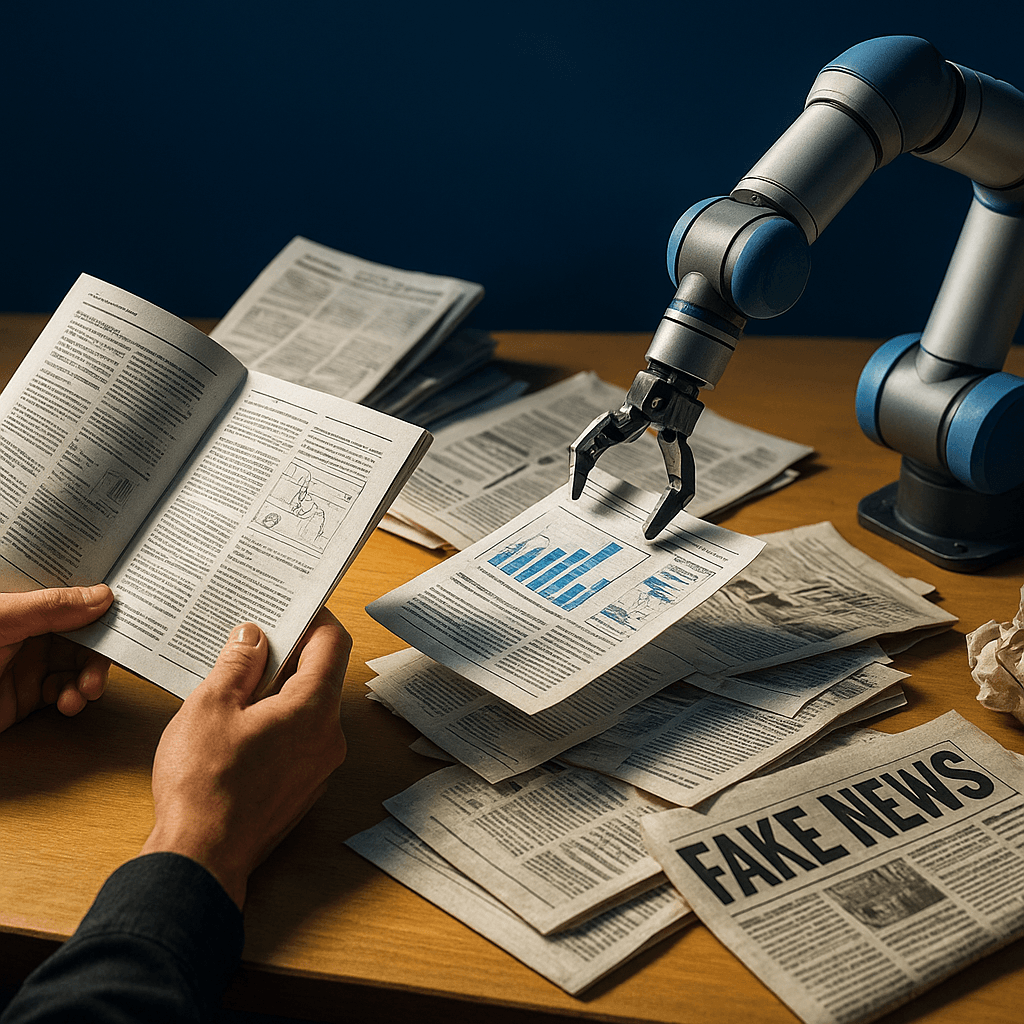
AI Won't Kill SEO: AI transforms SEO workflows but relies on human expertise for structured data and oversight to deliver reliable results.Human Edge Persists: Without technical prompts and judgment, AI struggles with uncurated web data, misinformation, and complex audits.Roles Evolve Instead: SEO pros shift to managing AI tools, crafting prompts, and strategy, amplifying efficiency rather than facing obsolescence.Will AI Make SEO Obsolete in 2026?
AI will not make SEO obsolete. It will change how SEO work gets done.
The fear is understandable. AI systems are getting smarter. They can handle more technical tasks. Some people think they’ll eventually replace human SEO analysis entirely.
Early experiments show a different story. AI can help with many tasks, but it still depends on detailed human input. It needs structured data and technical oversight to produce useful results.
The real change is redistribution. AI speeds up parts of the workflow. It raises the bar for execution. And it changes where human expertise matters most.
Why Will AI Make SEO Obsolete Is the Wrong Question
AI works best with highly structured data. Think of coding a Python script. The instructions are clear and the output is measurable.
Even then, you need human expertise. AI can generate scripts, but someone has to write detailed instructions and debug the output. Without that guidance, the results are often unusable.
AI thinks like a machine. Technical practitioners get the most from it because they understand how to communicate with it effectively.
Take generating product descriptions or alt text at scale. You need technical knowledge to transform Product Information Management data into rich, usable prompts. The AI doesn’t know how to do that transformation automatically.
AI depends on human instructions. Output quality reflects input quality. You need to think in structured terms – IDs, classes, and distinct entities – to get reliable results.
This makes prompt creation a critical skill. Companies should consider technical expertise when using AI to drive efficiency.
Don’t celebrate too soon though. As AI evolves and absorbs more information, this advantage may be temporary. For now, AI still depends on human expertise to function.
Where AI Struggles Without Human SEO Expertise
Data is both AI’s strength and weakness.
Early AI models relied on curated data within their systems. OpenAI’s models couldn’t perform web searches up to GPT-4. After GPT-4, AI systems began relying less on internal data and more on web searches for fresh information.
The web isn’t curated. It contains lots of misinformation. This shift initially represented a step backward for most AI tools, including ChatGPT and Gemini. It mirrors how traditional algorithms rely on raw information.
This raises a key question: Is more information always better for AI?
The open web contains both facts and opinions. AI often can’t tell the difference. Giving it access to uncurated data has caused more errors in its outputs.
Finding the right balance of data remains a challenge. Developers continue refining systems, but users still need to load up prompts with as much detail as possible. This helps offset how AI sources and evaluates information.
These limitations highlight a core issue: without structured input and human judgment, AI struggles to produce reliable SEO insights.
Why Full SEO Automation Is Harder Than Expected
Basic AI tools can help with SEO tasks. Full automation is far more complex than it sounds.
AI platforms and technologies are evolving rapidly. Organizations began producing AI agent platforms like Make, N8N, and MindStudio. These platforms provide a canvas for automating workflows. They combine inputs, outputs, and AI-driven decision-making.
Used well, they can turn from-scratch content creation into structured editorial processes. The efficiency gains can be significant.
Tools like Writecream demonstrate this middle ground effectively. Rather than requiring custom API integrations or complex workflow automation, it provides pre-built AI frameworks for common SEO tasks. From meta descriptions and product copy to blog outlines and social media content, these tools allow SEO professionals to leverage AI’s efficiency for content-related tasks without the months-long setup that full automation systems would require.
However, applying this to real-world SEO work is where complexity sets in. A full technical SEO audit pulls from multiple data sources and environments. Crawl data, browser-level diagnostics, and desktop tools all play a role.
While parts can be automated, stitching everything together into a reliable, end-to-end workflow is difficult. It often requires custom infrastructure, API work, and ongoing maintenance.
Even with platforms like N8N, full end-to-end automation of complex SEO tasks remains challenging. Simpler, checklist-style audits can be automated. But deeper, more technical work often needs to be simplified to fit automation. That’s not advisable.
In practice, fully automating SEO at depth requires tradeoffs. That’s why human expertise is still critical.
AI Tools Are Advancing But Not Replacing SEO Professionals
More recently, there’s been a wave of local AI applications. These let you create your own “brain” on a laptop or desktop. They’re often code editors with support for popular AI models. They include local structures for saving reusable skills, similar to Claude Projects or ChatGPT Custom GPTs.
Tools like Cursor and Claude Code allow you to connect models, generate code, and automate parts of workflows through prompts.
It’s possible to use these technologies to build a system that automates a technical SEO audit. I attempted this. While the capability exists, building a system that matches the depth and quality of a manual audit could take months. This is especially true when handling large volumes of data.
Initial issues included memory limitations. AI struggled to retain both the data and its detailed instructions. In some cases, outputs were also misweighted. For example, flagging missing H1s as critical despite finding no instances.
These issues could be resolved over time. But they highlight that these tools aren’t automatic shortcuts. Making effective use of them still requires technical expertise, time, testing, and troubleshooting.
They lower the barrier to building AI-driven systems. But they don’t eliminate the need for technical expertise. They simply shift the work.
What Would Need to Change for SEO to Become Truly Obsolete
For SEO to become obsolete, AI would need to operate independently, reliably, and at scale without human correction. Current AI can only act with human input. It struggles to differentiate between fact and fiction.
Some algorithms have reached their limits in terms of commercial viability. This is arguably why Google is trying to convince us that links are redundant before they truly are.
Consider AI as an evolution of algorithmic output. These systems can attempt to make analytical determinations based on input data. However, the idea that feeding AI more and more data is an unrestricted path to success is already running into significant limitations.
This doesn’t mean technical analysts are entirely safe. Humanity’s ambition for faster, more efficient insights will continue. Initially, AI will be seen as the solution to everything. If one AI falls short, another can critique its results.
However, AI requires significant processing power. The real challenge will be finding the balance between AI and simpler algorithms. Algorithms should handle basic tasks. AI should be used for analysis and insights.
This balance between AI and algorithmic efficiency is still years, perhaps decades, away. Only then will AI truly test SEO professionals and create the potential for redundancies.
AI’s learning is hindered by the web’s misinformation. This provides SEO professionals with temporary insulation. This advantage won’t last forever, but it offers a valuable head start.
Social Factors That Slow AI Adoption in SEO
There are also limitations tied to how society adopts AI. Many technological innovations were initially considered “cheating.”
Calculators were banned from exam rooms. The internet was seen as a shortcut compared to traditional research. Yet those perceptions didn’t last.
Most technologies, despite rapid advancement, aren’t adopted quickly due to cost and social factors. We value human perspective. We often resist tools that threaten how we think or work.
The main barrier to AI replacing us is how we perceive it. As long as it’s seen as a threat to our ability to provide, it won’t fully replace human roles. That perception will change over time.
As these technologies become normalized, adoption will follow. Governments will adapt. Expectations around human creativity will continue to evolve.
Algorithms and Google didn’t end human interaction on the web. AI won’t eliminate contributions from people. In the medium to long term, adaptation is inevitable.
The Future of SEO With AI Integration
Will AI make SEO obsolete? The answer is no, but AI will fundamentally reshape how SEO professionals work.
AI integration with SEO is already happening. Contrary to fears, AI won’t eliminate SEO. Instead, it will reshape how SEO is practiced. AI can automate routine tasks like generating product descriptions and alt text. But its effectiveness still depends on precise, technically sound input.
The importance of technical expertise is growing. The ability to craft detailed, technically sound prompts is becoming more valuable. This ensures AI tools are used effectively and reinforces the role of experienced SEO professionals.
Data sensitivity affects AI performance significantly. AI performance varies depending on the data it processes. Systems using curated datasets behave differently from those relying on open web data. This highlights the importance of data strategy and structured oversight.
SEO roles are evolving, not disappearing. As AI advances, SEO roles are shifting. Professionals are more likely to focus on managing AI systems and refining outputs rather than being replaced by them.
Societal acceptance and adaptation matter. Widespread adoption of AI in SEO depends on how quickly society embraces these tools. As normalization and regulation evolve, so will the role of SEO professionals.
Despite AI’s capabilities, the creative, strategic, and complex aspects of SEO still require human insight. The future of SEO is a collaboration between human expertise and machine efficiency.
The question isn’t whether AI will make SEO obsolete. It’s how SEO professionals will adapt to work alongside increasingly sophisticated AI systems. Writecream exemplifies this collaboration by analyzing competitor SERP data and generating optimized content with real-time scoring across 50+ ranking factors. Rather than replacing SEO expertise, tools like this amplify it by providing the competitive intelligence and structured optimization that modern SEO demands. Explore how Writecream can enhance your SEO workflow while keeping you in control of the strategy.