TL;DR Summary:
Smart Hook Execution: A strong social media hook is the opening line, visual, or idea that grabs attention within the first few seconds, acting as the entry point to your marketing funnel by stopping passive scrolling and creating active engagement.Multi-Sensory Impact: Pair on-screen text with visuals and voiceover to multiply impact, as 85% of video viewers watch with sound off, making subtitles and visual elements essential for conveying your message effectively.Data-Driven Optimization: Define clear goals before creating content, then test variations like different headlines, video versus static images, and posting times, using analytics to identify what resonates with your audience and doubling down on proven formats.How Google’s Universal Commerce Protocol is Changing Ecommerce SEO Forever
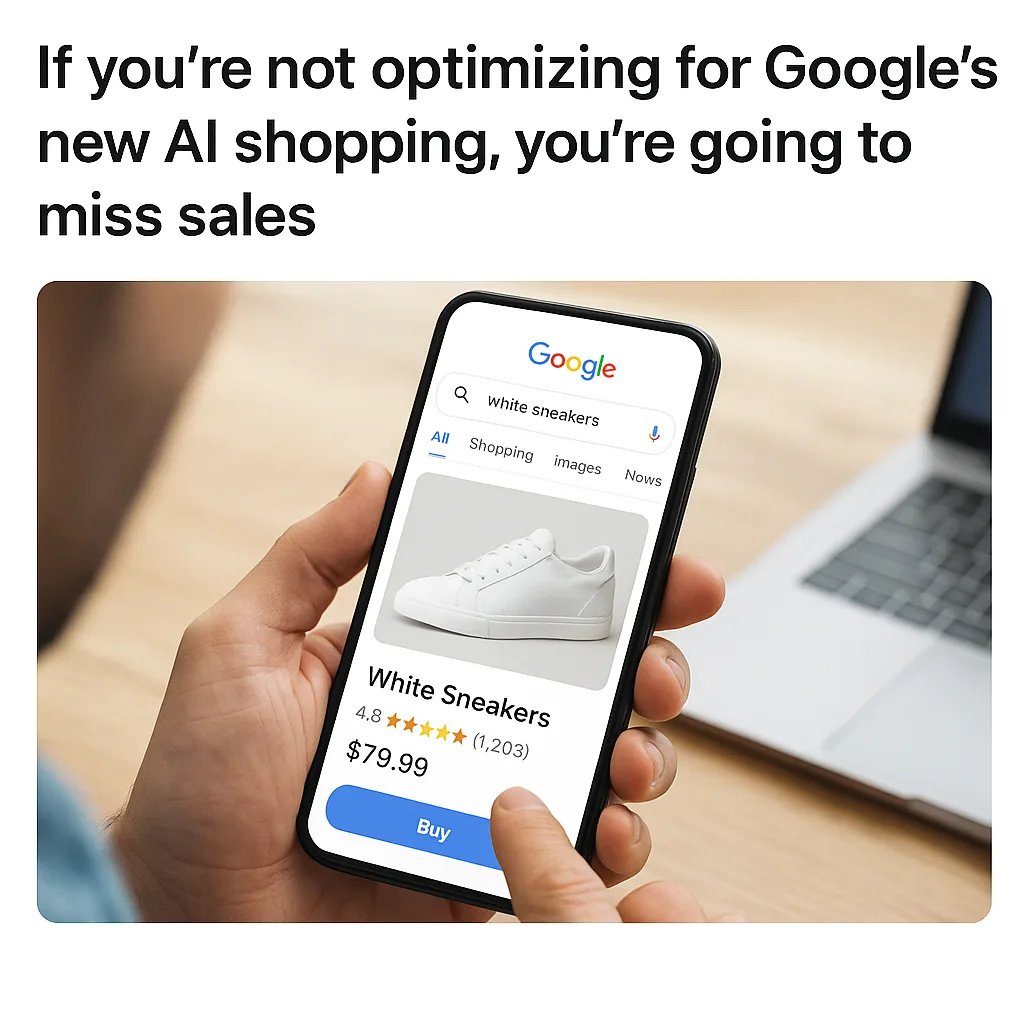
Shopping online just got a massive upgrade. Google’s Universal Commerce Protocol now lets artificial intelligence discover, compare, and buy products without you ever leaving Google’s search results or Gemini chat.
This means your SEO strategy needs to change. Fast.
Google AI Now Handles the Entire Shopping Journey
Google’s Universal Commerce Protocol launched on January 11th with major partners like Shopify, Walmart, and Target already on board. The system includes three powerful features:
Business Agent gives your brand an AI representative inside Google Search and Gemini. Customers ask questions, compare products, and get recommendations without visiting your website.
Direct Offers let you put exclusive discounts directly into Google’s AI responses. Your promotions now live inside the recommendation engine.
Checkout in AI Mode completes purchases inside Google’s interface. Google went from sending traffic to your site to handling the entire sale.
People can now say “help me plan a camping trip” or “what removes wine stains from fabric” and Google’s AI pulls live inventory, pricing, and availability from retailers. It completes the purchase in the same conversation.
Your Product Data Determines AI Visibility
Here’s what changed: Google’s AI decides which products to recommend based on your product feeds and structured data, not your website content.
When someone searches for something, the AI looks at your Merchant Center data first. If your product information is incomplete or confusing, the AI skips you entirely.
A luxury jewelry retailer I worked with had this exact problem. Customers weren’t searching for “14k gold bracelet.” They typed “anniversary gift for someone who likes simple jewelry” or “modern gold that doesn’t look old-fashioned.”
With Google’s Universal Commerce Protocol, shoppers describe what they need in plain English. The AI matches those descriptions to products in real-time. But this only works when your product data gives the AI something useful to work with.
Google Merchant Center Becomes Your AI Storefront
Your Merchant Center feed now connects your entire retail operation to Google’s AI. Inventory, pricing, shipping, and product details all flow through it so Gemini can act on them.
Every field matters now. Titles, descriptions, categories, brand names, and images aren’t just metadata. They’re how the AI understands what you sell and whether it should trust your data.
Google is adding new fields that describe how products get used in real life. Things like common questions, compatible accessories, and what people buy when something is out of stock. This helps the AI think like a human salesperson.
Essential product feed elements:
- Complete titles and descriptions
- All product categories and GTINs
- Multiple product images
- Accurate pricing and availability
- Shipping and return information
New conversational fields coming soon:
- Answers to common product questions
- Compatible accessories and add-ons
- Product substitutes
- Real-world use cases
Link Search Console and Merchant Center Now
Connect these two Google tools immediately. Search Console shows how your pages perform. Merchant Center shows how your products perform. In an AI-driven world, you need both views.
This connection lets you see which products Google’s AI picks up and which ones get ignored. You’ll spot disapproved items, missing data, and price mismatches before they kill your visibility.
What to monitor:
- Disapproved products and reasons why
- Missing required product attributes
- Click-through rates on product listings
- Price and availability mismatches
- Feed errors and crawl issues
ClickRank can centralize this monitoring by tracking product feed health, competitive positioning in AI results, and attribute completeness across your catalog. This gives you a single dashboard to spot issues before they impact AI selection.
Your Competition Changed Completely
You’re no longer competing for website clicks. You’re competing for inclusion in Google’s AI recommendations.
When AI handles the shopping journey, your products need to stand out in the recommendation layer. The AI compares options and presents the best matches. If your product data is weak, you won’t make the cut.
A camping gear company I worked with learned this the hard way. They had great products but basic descriptions. When customers asked the AI for “lightweight rain gear for backpacking,” competitors with detailed specifications and use cases got recommended instead.
Small Data Issues Have Big Consequences
In traditional SEO, missing information might hurt your rankings. With Google’s Universal Commerce Protocol, incomplete data removes you from consideration entirely.
The AI needs complete, accurate information to recommend your products confidently. A single pricing error or missing product detail can quietly pull items out of the AI layer.
Most brands don’t notice until they see a sudden drop in visibility. By then, they’ve already lost weeks of potential sales.
Ready for AI-Powered Commerce?
Google’s AI now decides what products millions of shoppers see and buy. Your product feeds and Merchant Center data control whether you’re included in those decisions.
The brands that optimize for AI selection now will dominate the ones that wait. Clean data, complete product information, and proper Merchant Center setup aren’t optional anymore.
But how do you know if your product data is actually competitive enough for Google’s AI to choose you over the hundreds of other options in your category?