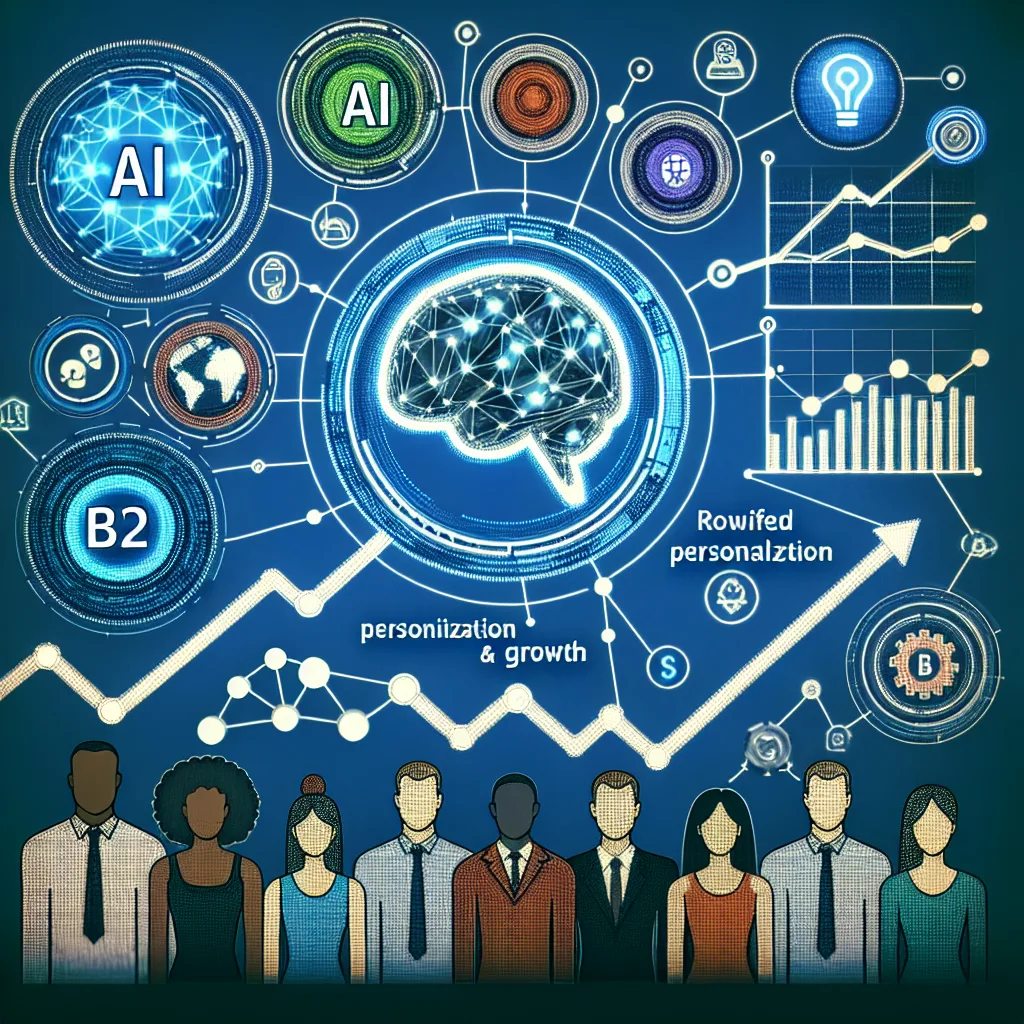
TL;DR Summary:
AI-Driven Data Analysis: AI revolutionizes B2B marketing by analyzing vast amounts of data in real-time, uncovering actionable insights that help businesses identify trends, predict buyer behavior, and optimize marketing strategies. This enables more targeted marketing efforts based on firmographic, technographic, and behavioral data.
Personalization: Personalization is crucial in B2B marketing for building strong client relationships and driving engagement. AI allows businesses to deliver highly personalized experiences at scale by tailoring content, ads, and communications to individual needs, leading to higher conversion rates and customer satisfaction.
Enhancing the Buyer Journey: AI enhances the customer journey by providing insights into each stage of the buyer's journey, from awareness to purchase and beyond. This allows businesses to create tailored experiences that meet buyers' specific needs, improving customer satisfaction, loyalty, and retention.
Operational Efficiency and Future Trends: AI automates many aspects of the sales process, reducing time and effort required from sales teams and improving operational efficiency. As AI continues to transform B2B marketing, businesses must adapt to market demand and collaborate effectively with AI systems to stay competitive.
The Rise of AI in B2B Marketing: Personalization, Efficiency, and the Future of Buyer-Centric Strategies
In the ever-evolving world of B2B marketing, understanding and engaging with buyers has become a paramount concern. Traditional methods often fall short in meeting the complex needs of modern B2B buyers, who crave personalized experiences and streamlined processes. This is where AI steps in, revolutionizing the way businesses approach buyer-centric strategies.
AI-Driven Data Analysis: Uncovering Actionable Insights
AI’s ability to analyze vast amounts of data in real-time is a game-changer for B2B marketing. By leveraging machine learning algorithms, businesses can uncover actionable insights from customer data, enabling more informed decision-making. AI-driven data analysis helps identify trends, predict buyer behavior, and optimize marketing strategies. For instance, AI can segment audiences based on firmographic, technographic, and behavioral data, allowing for more targeted marketing efforts.
Personalization: The Key to Engagement
Personalization is no longer a luxury in B2B marketing; it’s a necessity for building strong client relationships and driving engagement. The B2B buying process has become increasingly complex, with buyers expressing dissatisfaction with their providers. To overcome these challenges, adopting AI-enabled buyer-centric strategies is crucial. AI allows businesses to deliver highly personalized experiences at scale by analyzing customer data and tailoring content, ads, and communications to individual needs.
AI-powered tools like CRM systems and predictive analytics help businesses anticipate client needs and personalize interactions, leading to higher conversion rates and customer satisfaction. Personalization significantly enhances engagement and conversion rates for channel partner, B2B, and account-based marketing (ABM) organizations. Companies that excel in personalization often see revenue increases and boosted sales conversion rates.
Enhancing the Buyer Journey with Insightful Experiences
AI enhances the customer journey by providing insights into each stage of the buyer’s journey, from awareness to purchase and beyond. By mapping these stages, businesses can create tailored experiences that meet buyers’ specific needs at every point. This not only improves customer satisfaction but also increases loyalty and retention.
Streamlining the Buyer Journey with AI Automation
Generative AI in B2B marketing simplifies and accelerates the buyer journey by automating information gathering, RFP preparation, and vendor comparisons. This makes purchasing faster and more efficient. AI also supports real-time user interactions, enabling better support and personalized outreach. Sellers must adapt quickly to this new reality, where AI bots enhance interactions and automate content generation for more personalized experiences.
AI-Driven Operational Efficiency: Boosting Productivity
AI can automate many aspects of the sales process, such as data collection and analysis. This reduces the time and effort required from sales teams, allowing them to focus on more strategic tasks and improving overall operational efficiency. By leveraging AI to analyze data and predict buyer behavior, businesses can fine-tune their sales strategies, pinpoint promising leads, and suggest optimal engagement times, ultimately boosting conversion rates and sales.
Adapting to Market Demand with Agile AI Strategies
To truly leverage AI for buyer-centric strategies, businesses must be willing to adapt to market demand. This means being responsive to buyer needs and preferences, which can change rapidly. By using AI to monitor these shifts and adjust marketing strategies accordingly, businesses can stay ahead of the competition.
The Future of B2B Marketing: AI-Human Collaboration
As AI continues to transform B2B marketing, the lines between human and bot interactions will blur further. Sellers will need to adapt their strategies to appeal not just to human buyers but also to AI-powered systems that perform key buying tasks. This shift requires a deep understanding of how AI can enhance real-time interactions and personalize content for different buying groups.
The Evolving Landscape of AI-Driven B2B Marketing
The integration of AI into B2B marketing is not just a trend; it’s a necessity for businesses aiming to engage buyers effectively. By harnessing AI’s power to personalize experiences, streamline the buyer journey, and enhance operational efficiency, businesses can drive significant growth and customer satisfaction.
As we move forward in this AI-driven era, one question remains: How will the increasing reliance on AI in B2B marketing change the dynamics of human interaction in the sales process, and what new opportunities or challenges will this bring? The future is ripe with possibilities, and those who embrace AI’s potential will undoubtedly stay ahead of the curve.