TL;DR Summary:
Bing Adds AI Labels: Microsoft is rolling out a visible “Made with AI” tag directly on ad images across Microsoft Advertising and Bing Search.Disclosure Is Required: Advertisers can declare AI-generated images or videos, add supported watermarks, and remain responsible for accurate labeling.Scale Made Easier: Ads Studio Library, APIs, and product feeds let marketers manage AI declarations across large asset libraries without updating every file manually.Industry Standard Emerges: With Google already using similar labels, AI transparency is becoming a standard part of search advertising rather than a temporary experiment.Why does your Bing ad suddenly show a “Made with AI” tag in the corner? Microsoft started adding this label to certain ads across Microsoft Advertising and Bing Search, and the change matters because it signals a shift toward required disclosure of AI-generated content in advertising. The Made with AI label now appears directly on ad images, placed in the corner, and it tells searchers the visual came from an AI tool.
What the Made with AI Label Looks Like on Bing
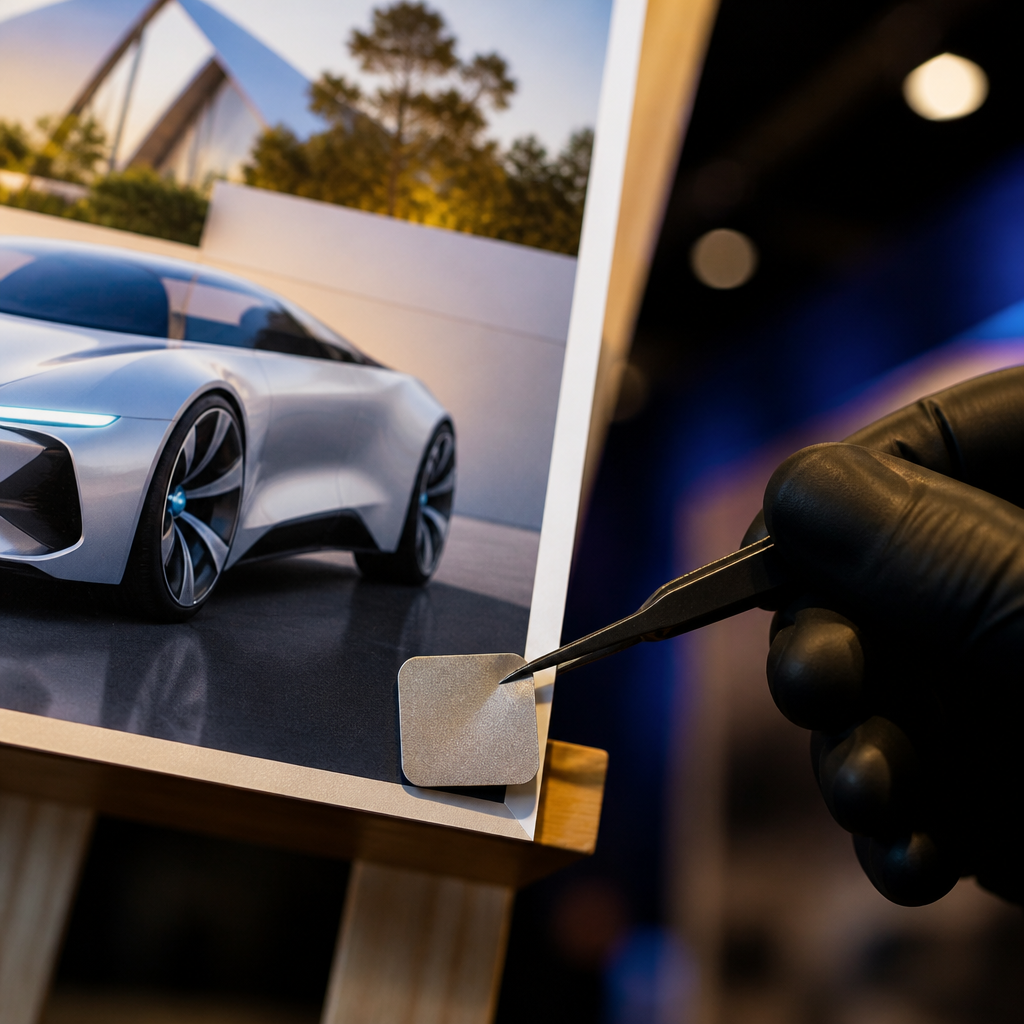
Microsoft posted screenshots on its blog showing the label attached to the corner of ad images. The text reads “Made with AI” and sits directly on the image itself, not in a separate box or disclaimer area. Barry Schwartz reported this on November 20, 2026, after spotting the rollout across Microsoft Advertising and Bing Search. If you run ads on Bing, check your campaigns now to see whether this label already appears on your creative.
AI Content Transparency Controls Are Now Generally Available
Microsoft confirmed that AI content transparency controls are now generally available in Microsoft Advertising. This means the feature has moved past testing and now applies broadly to advertisers on the platform. You can mark whether an image or video in your ad contains AI-generated content, and once you declare it, you can choose a visible watermark where Microsoft supports that option. This puts the responsibility on you as the advertiser to flag AI content before it appears to searchers. With this shift, choosing the right generation tool matters just as much as the disclosure step itself, since advertisers now need to declare AI-generated visuals while still retaining full rights to use them commercially. A tool like Airbrush: AI Image Generator With Full Commercial Rights fits this need directly, letting marketers produce ad creative that’s easy to flag honestly without losing the commercial usage rights their campaigns depend on.
How to Manage Your Made with AI Declarations at Scale
If you manage many ads, Microsoft built tools to handle this without manual work on each asset. You can update a single image or video, or apply changes across your whole library, through the Ads Studio Library. Microsoft also supports this through its Advertising APIs and product feeds, so you can automate declarations if you run large campaigns with hundreds or thousands of assets. This matters in practice because advertisers with large catalogs need a way to label content without reviewing every file by hand.
Microsoft’s AI Detection Signals Offer Help, Not Final Answers
Microsoft also gives advertisers access to its own AI detection signals. These signals act as a reference point for supported asset types, flagging content that looks AI-generated. However, Microsoft states clearly that you still decide on your own declarations, and you remain responsible for them. This means the detection tool helps you spot content you might have missed, but it does not replace your judgment or your legal responsibility to label content correctly.
Google Ads Already Uses a Similar AI Label
Google Ads has supported AI labels for some time, and these labels have already shown up on live Google Search ads. This confirms that AI disclosure in search advertising is becoming standard practice across major platforms, not a one-off policy from a single company. If you run ads on both Bing and Google, expect to manage AI declarations separately on each platform, since each company controls its own rules and label design.
Check your Bing and Microsoft Advertising campaigns now to see if the Made with AI label appears on any of your ad images or videos. Review your AI-generated assets and update your declarations through the Ads Studio Library before Microsoft or a searcher flags it for you. Watch for Google to expand its own labeling further, since both platforms now treat AI disclosure as a standard requirement rather than an experiment. If you’re generating ad visuals with AI, tools like Airbrush make it easy to create and label AI-generated images while keeping full commercial usage rights intact for your campaigns.