TL;DR Summary:
Big Win, But Not Universal: Custom visuals can lift organic traffic by as much as 110%, but the gains depend on the content already having search demand and a solid topic fit.Infographics Lead the Pack: Among featured images, infographics, and video, infographics delivered the most reliable boost, especially on evergreen educational pages that needed clarity and engagement.Video Has Upside, Not Certainty: Video can produce huge gains when search intent and video content align, but results are inconsistent and often require more effort than other visual types.Know Where to Invest: Custom visuals improve strong pages, but they cannot rescue declining content or create demand for weak topics, so the best strategy is to enhance pages already gaining traction.Do custom visuals actually increase organic traffic?
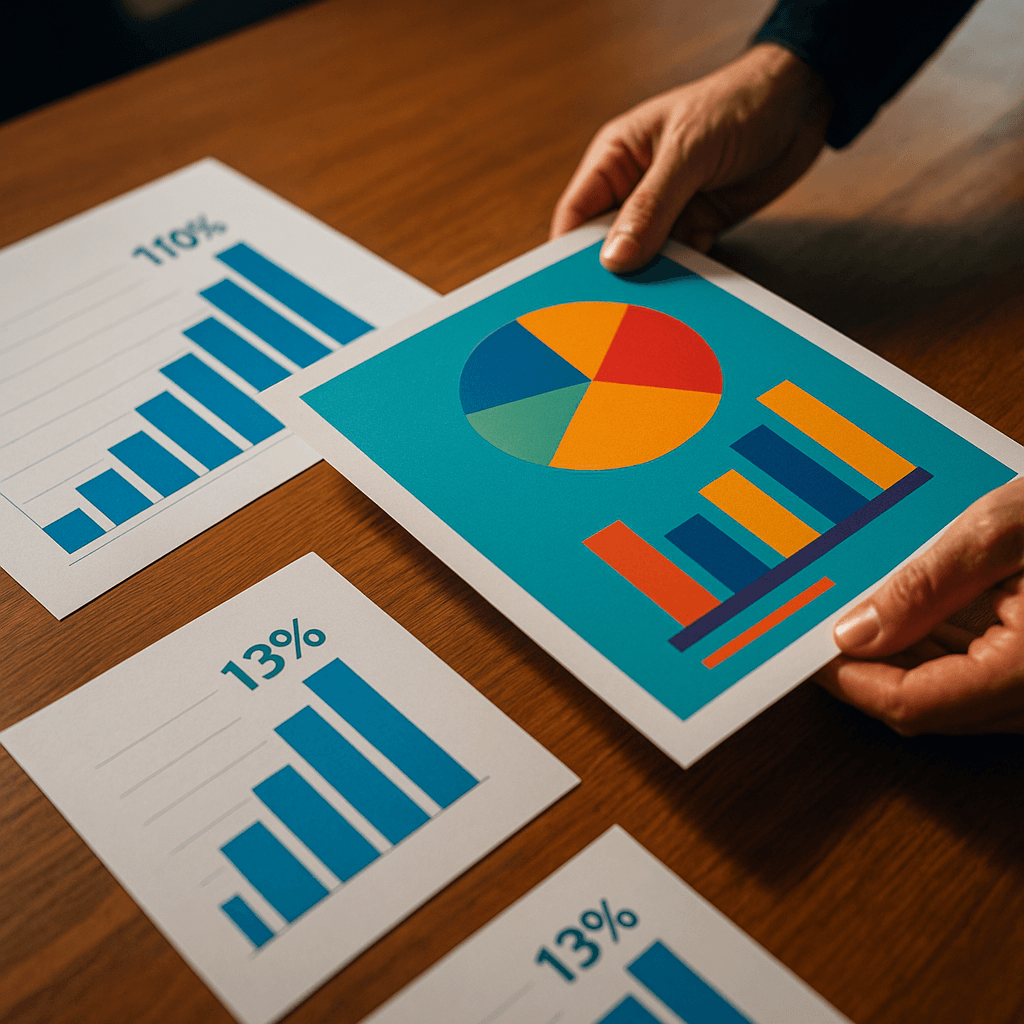
A six-month experiment across 47 articles found that custom visuals boost organic traffic by up to 110%, but only certain types of visuals deliver meaningful results. The study tested custom featured images, infographics, and video on both new and existing content to determine which design investments actually improve SEO performance.
The results show that custom visuals work best on pages with existing search demand. They amplify strong content but cannot revive declining pages or create interest where none existed.
How Custom Visuals Boost Organic Traffic: The 47-Page Experiment
An accounting education website served as the testing ground for this comprehensive study. The experiment divided 47 articles into two groups to measure different approaches.
The first group included 39 existing articles that already had organic traffic. Each page received only a custom featured image to create a clean before-and-after comparison.
The second group consisted of six brand-new articles. These tested all three visual asset types: featured images, infographics, and video. Each asset was added at different stages to measure individual impact.
Success was measured using monthly page visits. The research team compared organic traffic from the month before implementation to the average of the implementation month plus the following month. This approach created cleaner data since some designs went live toward month-end.
To track these metrics consistently across 47 pages, monitoring tools like Visitor Tracking were used to compare organic traffic patterns before and after each design element was added.
Custom Featured Images Show Modest Gains on Existing Content
The first phase focused on 39 existing articles that received custom featured images. Results showed a 13% average increase in organic traffic across all pages.
Some pages experienced much larger jumps:
- QuickBooks ProAdvisor Academy: +379%
- The CAS page: +100%
- Build a CAS team: +73%
- The IES product launch: +60%
- ProAdvisor certification: +58%
The pattern was clear: pages with existing search demand responded best. Custom visuals boosted organic traffic where audience interest already existed.
Infographics Deliver the Biggest Custom Visuals Boost to Organic Traffic
Five out of six infographic additions resulted in strong positive traffic lifts. The average increase was 110%, making infographics the most reliable growth tool in the entire experiment.
Infographics worked especially well because they improved content clarity, broke up dense educational material, increased time on page, and encouraged sharing. For evergreen educational content, infographics proved to be the strongest lever for traffic growth.
Tools like Visitor Tracking made it easy to identify which pages responded best to infographics and track exactly when traffic lifts occurred relative to implementation dates.
Video Creates the Highest Potential But Inconsistent Results
Video was the most resource-intensive asset tested, so it was used selectively on three articles. Results varied dramatically:
One video generated a 292% increase in organic page visits. This AI financial modeling video ranked in Google’s video results and reached the first page of YouTube for its target keyword.
Two other videos had minimal impact on site traffic despite receiving approximately 500 YouTube views each.
Video worked best when the topic had strong search demand and clear alignment between search intent and video consumption. It created a second visibility layer beyond traditional organic listings, but outcomes were not guaranteed.
Where Custom Visuals Failed to Boost Organic Traffic
Understanding what didn’t work proved equally important. Custom visuals could not revive declining content or reverse negative traffic trends. If search demand was decreasing, visuals alone couldn’t fix the underlying problem.
Overinvesting in low-demand topics was a mistake. No visual asset can manufacture interest where none exists organically. Design supports performance but cannot replace strong content and genuine search demand.
Custom Visuals Boost Organic Traffic Best With Proper Measurement
The experiment revealed several key patterns across all 47 pages:
Infographics were the most reliable growth tool, consistently delivering the strongest organic traffic gains. Layering multiple visual assets amplified performance where demand already existed.
Evergreen educational content responded particularly well to design additions. How-to guides and advisory-focused pages showed the best results when enhanced with custom visuals.
Most importantly, custom design worked best on content that already had attention. Adding visuals to pages with existing traffic made strong pages even stronger.
Using visitor analytics tools helps identify which pages already have attention and traffic momentum, making them the best candidates for design investment. Visitor Tracking provides the session-level data needed to track organic traffic changes and identify your highest-performing pages for visual enhancement. You can monitor individual visitor behavior patterns to see exactly how custom visuals impact user engagement across your content portfolio.