TL;DR Summary:
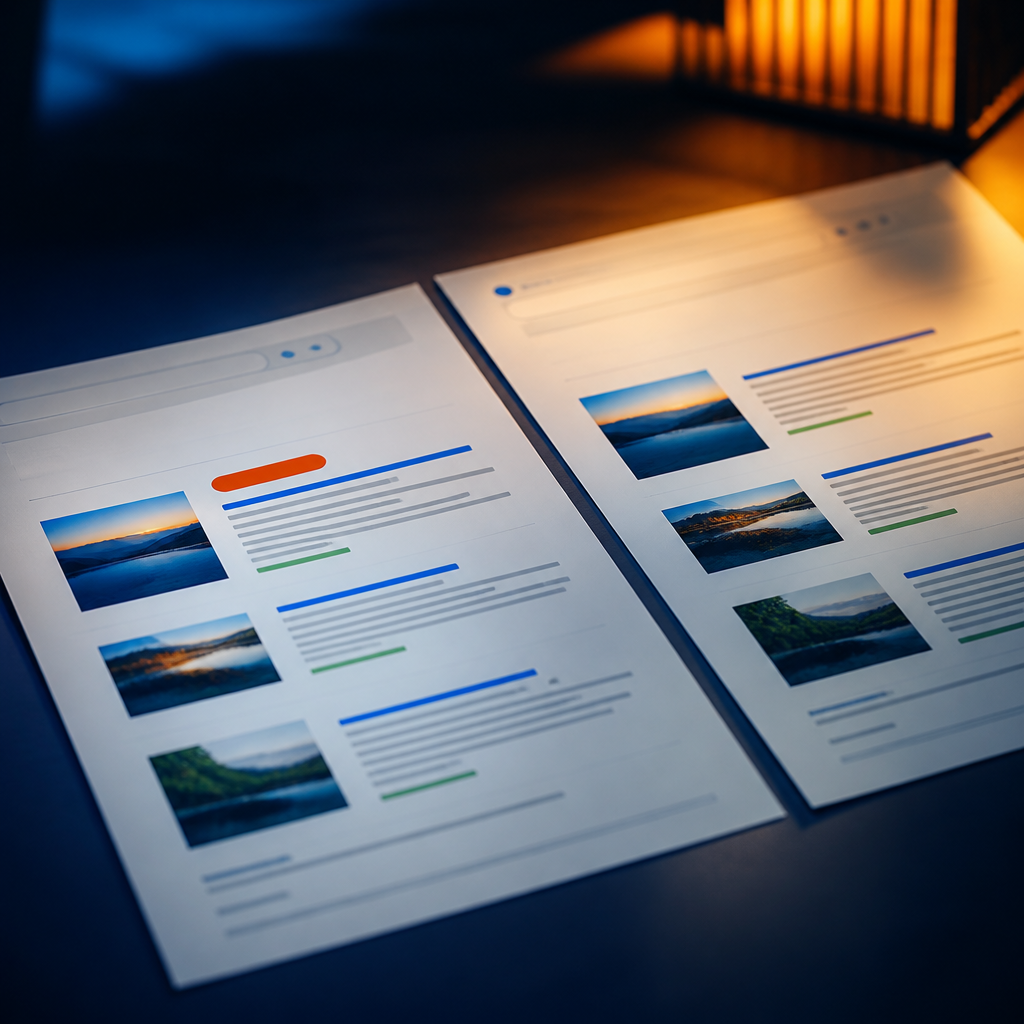
Visual and Functional Update: Google introduced a prominent "Sponsored results" header that groups all paid ads together and remains fixed at the top of the screen as users scroll. Users can now hide all sponsored ads with a single click, streamlining the interface and increasing transparency.User Control and Experience: This update makes ads clearly distinguishable from organic results and gives users unprecedented control, reducing cognitive load and making navigation easier, especially on mobile devices.Advertiser Impact: With the hide button and a strict limit of four ads per sponsored section, advertisers must focus on higher relevance and quality to engage users who consciously choose to view paid content. Generic ads face reduced visibility and effectiveness.Broader Implications and Strategy: The change aligns with growing demand for ad transparency and user empowerment, requiring advertisers to prioritize user-centric, valuable content and adapt to evolving search behaviors and AI-driven conversational search trends. Organic SEO gains renewed importance as users may increasingly filter out paid results.Google just rolled out one of the most significant visual changes to its search results in recent memory. Every paid ad now sits under a bold “Sponsored results” header, and users can make them disappear with a single click. This isn’t just a cosmetic tweak—it’s reshaping how people interact with search results and forcing advertisers to rethink their entire approach.
The search giant has spent decades fine-tuning the delicate balance between user experience and advertiser revenue. This latest move suggests they’re willing to give users unprecedented control, even if it means some ads never get seen.
The New Sponsored Results Interface Changes Everything
The most obvious change is visual. All text ads, Shopping ads, and other paid placements now cluster together under one unmistakable “Sponsored results” label. This header stays locked at the top of your screen as you scroll, making it impossible to forget you’re looking at paid content.
But the real game-changer is the hide sponsored results button sitting right next to that label. One click, and all the ads vanish, leaving only organic results visible. It’s a level of user control that most platforms wouldn’t dare offer, considering how much revenue is at stake.
Each sponsored section caps out at exactly four ads—no more, no less. The uniform grouping makes it crystal clear what’s paid and what’s not, eliminating the guesswork that used to come with scanning search results.
This rollout is global, affecting every Google search whether you’re on desktop or mobile. The interface remains consistent across devices, which means the same user behavior patterns should emerge everywhere.
Why Users Are Getting More Control Over Their Search Experience
Google’s decision to add the hide sponsored results button represents a significant shift in philosophy. For years, the company has made paid results blend seamlessly with organic ones, using subtle labels that many users overlooked entirely.
Now they’re doing the opposite. The sponsored content is boxed off, clearly labeled, and completely optional to view. This transparency comes with immediate benefits for anyone trying to find information quickly.
The persistent header means you always know your context. When you’re scrolling through sponsored results, there’s no ambiguity. When you switch to organic results, that’s obvious too. This clarity becomes especially valuable on mobile devices where screen space limitations used to make it harder to distinguish between different types of results.
Early user feedback suggests the change makes search results easier to navigate. The clean separation reduces cognitive load—you spend less mental energy figuring out what you’re looking at and more time evaluating whether it’s useful.
How Advertisers Must Adapt to Increased Transparency
The implications for paid search campaigns are profound. When users can easily hide your ads, every impression becomes more valuable—and more fragile.
Generic, low-quality ads that relied on blending in with organic results are going to struggle. Users who click through the sponsored section are making a conscious choice to engage with paid content. They expect that content to deliver immediate value, not waste their time with irrelevant offers or misleading headlines.
This creates a natural selection pressure favoring ads that genuinely match user intent. Brands investing in relevant, helpful ad copy and landing pages will likely see stronger engagement rates, while those pushing generic promotions may watch their performance decline.
The hide sponsored results button adds another layer of complexity. While most users probably won’t use it regularly, those who do represent a specific segment—likely more experienced, ad-averse users who might have been valuable customers if reached through organic channels instead.
The four-ad limit per section maintains competitive pressure. Google isn’t expanding ad inventory; they’re just making it more obvious. This means bidding strategies, targeting precision, and creative quality remain crucial differentiators.
Breaking Down the Technical Implementation
The new system works consistently across all Google search interfaces. The sticky “Sponsored results” header follows you as you scroll, ensuring you never lose context about what type of content you’re viewing.
Shopping ads, text ads, and other paid formats all get the same treatment. There’s no hierarchy within the sponsored section—everything gets equal labeling and falls under the same hide controls.
The hide sponsored results button operates on a session basis. Use it once, and ads stay hidden for that search session. Start a new search, and you’ll see sponsored results again unless you manually hide them. This approach balances user control with advertiser reach, ensuring that ad-hiding doesn’t become a permanent site-wide setting without user intention.
The mobile implementation deserves special attention. Mobile screens have always made it harder to distinguish ads from organic results, but the new header system creates clear visual separation even on smaller displays.
Strategic Implications for Different Types of Businesses
E-commerce brands face particularly interesting dynamics under this new system. Shopping ads now cluster with text ads under the same sponsored header, potentially changing how users browse product results. The hide option might appeal to users who prefer to research products through organic content before making purchase decisions.
Local businesses could see shifts in how their paid campaigns perform relative to Google Business Profile listings. Users looking for nearby services might be more likely to engage with organic local results if they’re actively filtering out sponsored content.
B2B companies marketing complex services may benefit from the increased intentionality. When someone chooses to engage with sponsored results in a professional context, they’re signaling genuine interest rather than accidentally clicking through.
Service-based businesses that rely heavily on capturing local search traffic need to pay closer attention to their organic presence. If users in their market start using the hide sponsored results button frequently, having strong local SEO becomes even more critical.
The Broader Context of Search Transparency
This update doesn’t exist in isolation. Regulatory pressure around advertising transparency has been building globally, with various jurisdictions demanding clearer disclosure of paid content across digital platforms.
Google’s approach goes beyond minimum compliance requirements. By giving users active control over ad visibility, they’re setting a new standard that other platforms may need to match. This could influence how paid content gets labeled across social media, video platforms, and other digital advertising channels.
The timing also coincides with growing user sophistication around digital advertising. People are more aware of how algorithms work, more skeptical of paid content, and more demanding of genuine value from the brands trying to reach them.
Measuring Impact on Campaign Performance
Advertisers need new metrics and benchmarks as these changes take effect globally. Traditional click-through rates may become less meaningful if the audience actively choosing to view ads becomes more targeted but smaller.
Conversion quality could improve even if conversion volume stays flat or decreases. Users who engage with clearly labeled sponsored content are making conscious decisions, potentially leading to better customer lifetime value metrics.
Impression data will need recontextualization. Lower impression counts might actually indicate healthier campaign performance if they represent more qualified audiences.
Cost-per-click dynamics may shift as competition adjusts to the new interface. Advertisers focusing on relevance and quality might find more efficient bidding opportunities as less sophisticated competitors struggle with the increased transparency.
Organic Search Gets Renewed Importance
SEO strategies may need recalibration as users gain more control over paid results visibility. Organic listings could see increased attention from users who actively filter out sponsored content, making comprehensive content strategies more valuable.
The gap between paid and organic performance might widen for brands that haven’t invested equally in both channels. Companies with strong organic presence have a safety net if users in their market start hiding sponsored results more frequently.
Featured snippets, local pack results, and other enhanced organic features could become more competitive as they represent the primary visible content for users who hide sponsored results.
What This Means for Search Behavior Evolution
User behavior patterns will likely evolve as people get comfortable with the new controls. Early adopters may start hiding sponsored results by default, while others might use the feature situationally—perhaps when conducting research versus when ready to make purchases.
The psychological impact of explicit choice matters too. Even users who don’t hide sponsored results are now making an active decision to view them, which could change how they evaluate and interact with paid content.
Search intent signals may become clearer over time. Users willing to engage with sponsored results are broadcasting commercial intent, while those hiding ads might be in research or information-gathering mode.
Preparing for Future Interface Changes
Google rarely makes interface changes this significant without having additional updates planned. The infrastructure supporting user control over ad visibility could easily expand to include more granular filtering options, persistent preferences, or integration with Google account settings.
Advertisers should prepare for a world where users have even more control over their advertising experience. This means investing in content quality, relevance, and genuine value rather than trying to game system mechanics.
The precedent Google is setting with the hide sponsored results button suggests they’re confident that high-quality advertising can coexist with user empowerment. Brands that align with this philosophy will be better positioned for whatever changes come next.
Competitive Advantages in the New Landscape
Companies that have already been focusing on user-centric advertising may find unexpected advantages in this environment. Ads designed to help rather than interrupt tend to perform better when users are actively choosing to engage with sponsored content.
Brand recognition could become more valuable as a differentiator within sponsored results sections. Users scanning clearly labeled ads may gravitate toward familiar names they trust, potentially benefiting established brands over newcomers trying to blend in.
Creative testing becomes more critical when every ad impression represents a conscious user choice. A/B testing ad copy, landing page alignment, and value propositions can yield clearer signals about what resonates with intentional audiences.
The Long-Term Vision for Search Results
Google’s willingness to give users the hide sponsored results button suggests they’re confident in the long-term value of transparent, user-controlled advertising. This approach could strengthen user trust while improving ad performance for brands willing to invest in quality.
The four-ad limit per sponsored section creates scarcity that should maintain competitive pricing while preventing user experience degradation. It’s a compromise that protects both advertiser opportunities and search result usability.
As artificial intelligence and personalization continue evolving, having explicit user preferences about ad visibility provides valuable data for improving relevance across all result types.
What will happen to search advertising when users can effortlessly filter out every paid result with a single click?