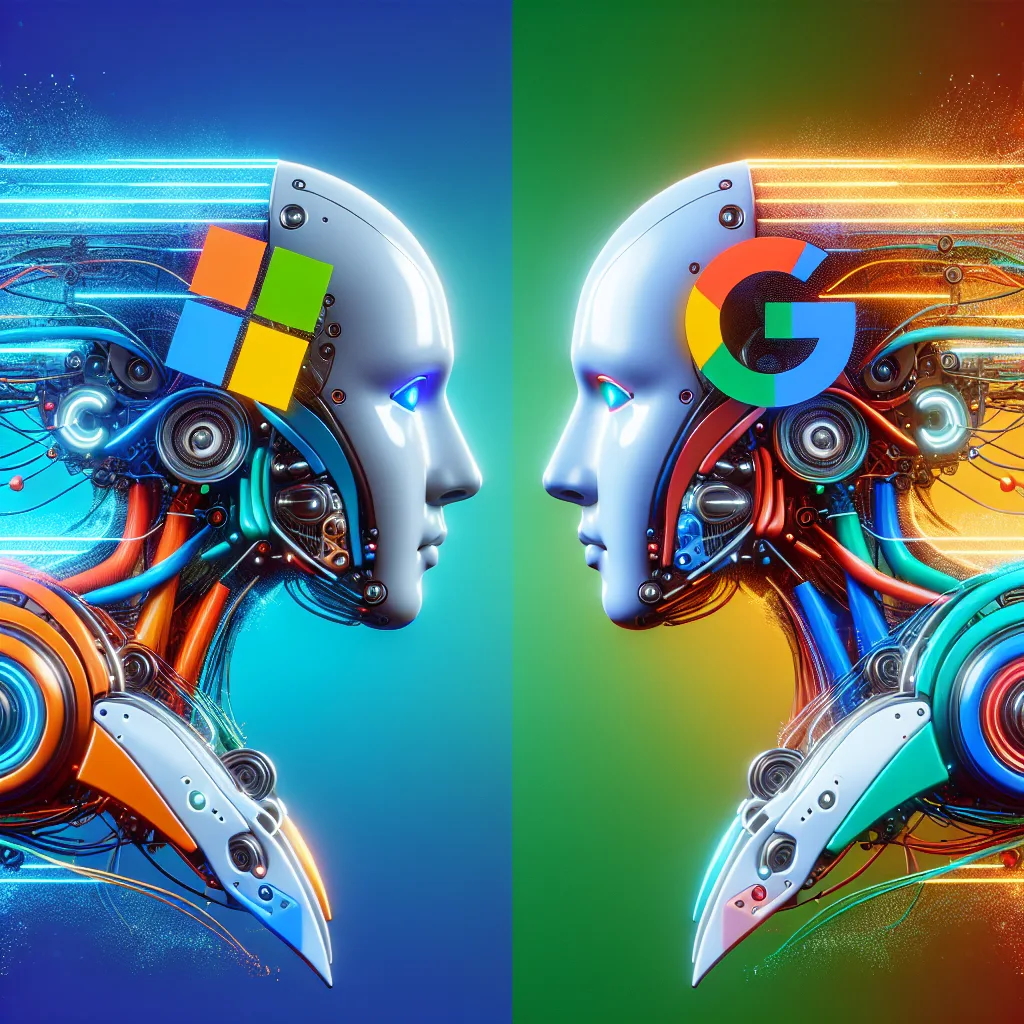
TL;DR Summary:
Copilot Boosts Workflows: Seamlessly integrates into Microsoft 365 for faster emails, presentations, and meetings, cutting task times by up to 30%.Gemini Drives Innovation: Excels in creative content, multimodal generation, and querying massive datasets via Google Cloud for data-heavy teams.Choose Your Ecosystem: Copilot suits Microsoft users with frictionless productivity; Gemini fits Google stacks for analytics and creativity.The AI Battle: Microsoft Copilot vs Google Gemini – A Deep Dive Into Enterprise AI Tools
The landscape of enterprise AI tools has shifted dramatically with Microsoft and Google rolling out their latest offerings. While both tech giants promise enhanced productivity and seamless integration, understanding the nuances between Microsoft Copilot and Google’s AI Mode (powered by Gemini) reveals distinct advantages for different use cases.
How Microsoft Copilot Transforms Daily Workflows
Microsoft’s approach with Copilot represents a significant leap forward in AI integration. Built directly into the Microsoft 365 suite, Copilot doesn’t just assist – it actively participates in your workflow. The system analyzes your emails, calendar events, documents, and Microsoft Graph data to provide contextually relevant assistance.
The real power becomes apparent in practical applications. Users report completing tasks up to 30% faster, with significant improvements in email management and file organization. Copilot excels at transforming raw text into polished presentations, analyzing complex spreadsheet data, and even providing detailed meeting summaries in Teams.
Google Gemini: Pushing Boundaries with Advanced AI
Google’s entry into the enterprise AI space leverages its powerful Gemini large language model. While sharing some fundamental capabilities with Copilot, Gemini takes a distinctly different approach. The system emphasizes creative content generation and sophisticated data analysis, making it particularly valuable for organizations heavily invested in data-driven decision-making.
Gemini’s integration with Google Cloud enables natural language querying of massive datasets – a game-changer for businesses requiring deep analytical insights. This capability, combined with its creative prowess in generating fresh ideas and complex documents, positions Gemini as a powerful tool for innovation-focused teams.
Ecosystem Integration and User Experience
The effectiveness of these AI tools largely depends on their ecosystem integration. Copilot’s deep embedding within Microsoft 365 creates a nearly friction-free experience. Users don’t need to switch contexts or learn new interfaces – the AI assistance feels like a natural extension of familiar tools.
This integration translates to concrete benefits: automated email summaries, rapid document drafting, and streamlined collaboration features that can save hours of work weekly. The system’s ability to understand and maintain context across different applications makes it particularly valuable for complex, multi-step tasks.
Data Analytics and Creative Capabilities
Google Gemini shines when it comes to handling large-scale data analysis and creative tasks. Its multimodal capabilities – combining text and image generation – open new possibilities for content creation and visual storytelling. Organizations that prioritize data-driven insights and creative content generation often find Gemini’s approach more aligned with their needs.
Enterprise Security and Compliance Considerations
Both platforms address enterprise-level security concerns, but their approaches differ. Microsoft Copilot emphasizes data residency and encryption features, making it particularly attractive for organizations with strict compliance requirements. Google’s solution focuses on secure data handling within its cloud infrastructure, with robust protection mechanisms for sensitive information.
Impact on Productivity and Work Quality
The productivity gains from these AI tools extend beyond simple time savings. Users report improved work quality and reduced mental fatigue, particularly with repetitive tasks. Copilot users note enhanced satisfaction with their output, while Gemini users praise its ability to generate fresh perspectives and data-driven insights.
Strategic Implementation Considerations
The choice between these platforms often aligns with existing tech stack investments. Organizations heavily invested in Microsoft’s ecosystem typically find Copilot provides immediate value. Conversely, companies leveraging Google’s cloud infrastructure or requiring advanced data analytics capabilities might find Gemini more suitable.
Future Implications for AI Workspace Evolution
These tools represent the beginning of a fundamental shift in how we interact with workplace technology. The focus has moved beyond simple automation to creating AI systems that genuinely collaborate with users, understanding context and providing meaningful assistance across various tasks.
The question isn’t just about which tool to choose – it’s about envisioning how these AI assistants will transform work processes in the coming years. Will these systems eventually become indispensable teammates rather than just tools? How will they shape the future of workplace collaboration and creativity?
What aspects of your current workflow could benefit most from AI assistance, and how might these tools reshape your approach to daily tasks?