TL;DR Summary:
Search Transforms Radically: AI shifts search from links to agentic task completion, managing multiple threads for research, comparisons, and actions like scheduling.Google Leads Internally: Tools like Jet Ski and Antigravity already power Google teams with persistent AI workflows, signaling rapid public rollout.2027 Agentic Leap: Fully autonomous systems arrive by 2027, handling complex tasks with self-improving capabilities for businesses and physical applications.What will happen to search engines when AI takes over?
Google CEO Sundar Pichai shared some revealing insights about where search is heading during a recent interview with Stripe executives. His predictions paint a picture of a dramatically different digital landscape coming sooner than most people realize.
The Future of Search and AI Centers on Task Completion, Not Just Information
Search won’t disappear, but it will transform into something barely recognizable. Pichai explained that the future of search and AI involves completing tasks rather than simply returning links to websites.
“If I fast forward, a lot of what are just information-seeking queries will be agentic in Search. You’ll be completing tasks. You’ll have many threads running,” Pichai said during the interview.
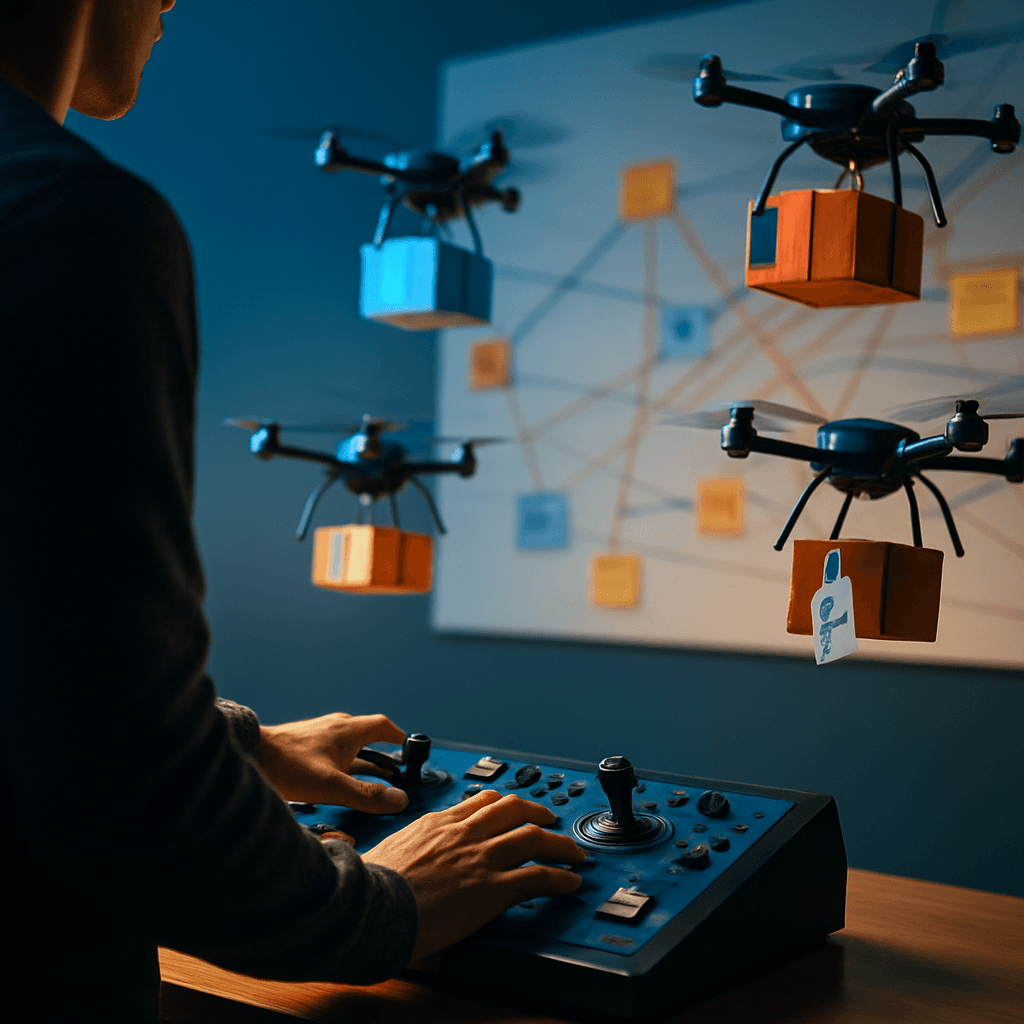
Think of search becoming an agent manager. Instead of typing a query and getting ten blue links, you’ll start multiple AI agents working on different parts of your request. One agent might research pricing while another compares features and a third schedules a demo call.
Pichai uses Google’s internal AI system this way already. He queries their system with requests like “Hey, we launched this thing. What did people think about this? Tell me the worst five things people are talking about?” The AI agent handles the entire research process and returns a summary.
This mirrors exactly what businesses need today when monitoring their brand reputation. Rather than manually searching through social media, forums, and review sites to gauge sentiment about product launches, companies need automated systems that surface the most important conversations and critical feedback.
Google’s Internal AI Transformation Shows What’s Coming
Google doesn’t just talk about AI and the future of search – they’re living it internally. The company uses an AI system called “Jet Ski” (the internal name for their public Antigravity tool) across multiple teams.
Google DeepMind and software engineering groups have completely changed their workflows using this system. They work in what Pichai calls “an agent manager world” with persistent workflows running continuously.
The timing of internal adoption reveals Google’s confidence in this direction. Just last week, Google rolled out Antigravity to their Search team. Pichai noted that change management becomes challenging in large organizations, but they’re “constantly pushing that.”
This internal adoption pattern suggests Google expects the future of search and AI to arrive faster than their public messaging indicates. When a company starts using new technology internally before perfecting the external version, it usually means they see competitive pressure building.
Agentic Systems Will Handle Complex, Long-Running Tasks
The next evolution goes beyond simple task completion. Pichai discussed systems like OpenClaw (initially called Clawdbot) that went viral recently for their ability to control computers directly.
“I think you want to give users capability where you have persistent long-running tasks in a reliable, secure way,” Pichai explained when asked about OpenClaw-like functionality coming from Google.
These systems will have “full coding models underneath, and the right harnesses and the right skills and the ability to persist and run somewhere security in the cloud, locally and in the cloud.”
Currently, only about 0.1% of people live this future according to Pichai. They build custom solutions for themselves, but bringing this capability to mass adoption represents “a very exciting frontier.”
Google DeepMind recently released instructions for using their open model Gemma 4 with OpenClaw, suggesting they’re moving quickly to democratize these capabilities.
AI Capabilities Will Jump Significantly in 2027
When asked about fully autonomous agentic systems that work without human oversight, Pichai twice mentioned 2027 as a critical year.
“I definitely expect in some of these areas ’27 to be an important inflection point for certain things,” he said. This timeline suggests we have less than three years before AI agents can handle complex business tasks independently.
Pichai also hinted at breakthrough improvements in AI training methods. He spent time recently with someone explaining “some improvement in post-training” that would “really show up as a nice jump.” While he wouldn’t provide specifics, this sounds like agentic self-improvement – AI systems learning to enhance their own capabilities without human guidance.
This progression makes sense. Early AI coding required constant human intervention – copying code, pasting error messages, and iterating back and forth. Today’s systems like Antigravity and Claude Code run code, check errors, and fix problems automatically. The next logical step involves AI systems improving their own usefulness without specific human prompting.
Physical AI Applications Are Scaling Rapidly
The future of search and AI extends beyond digital interfaces into physical world applications. Google’s Wing drone delivery service plans to reach 40 million Americans “in some reasonable time period” according to Pichai – not years from now.
Google previously moved too early on robotics, but AI has become the missing ingredient for ideas conceived 10 to 15 years ago. Their Gemini Robotics models now achieve state-of-the-art spatial reasoning capabilities.
Pichai emphasized the importance of first-party hardware for robotics and AI applications, especially in areas involving safety and regulatory requirements. “You want the first hand experience of the product feedback cycle,” he explained, drawing parallels to their Waymo autonomous vehicle program and TPU chip development.
This hardware focus suggests Google sees AI agents controlling physical systems as core to their search evolution strategy.
What This Means for Businesses Today
These changes create an urgent need for companies to understand how AI systems perceive and reference their brands. As search becomes more agentic, businesses that aren’t visible to AI models will lose opportunities to competitors who are.
The shift means traditional SEO approaches focused solely on Google search rankings miss the bigger picture. Companies need to ensure their content appears in AI-powered search results, chatbot responses, and agent recommendations.
AI Mentions addresses this challenge by identifying which specific queries trigger competitor recommendations instead of yours, revealing knowledge gaps that prevent AI citation eligibility. As AI agents become the primary way people discover and evaluate solutions, ensuring your business appears in their recommendations becomes critical for maintaining competitive position.